 |
by Mail
Federation of Reformed Churches
PO Box 1156
Williamsville, NY 14231-1156
by eMail
Paul Slish, Administrator
lemko@roadrunner.com
|
There are currently, 4 guest(s) and 1 member(s) that are online.
You are Anonymous user. You can register for free by clicking here
|
|  |
|
The Federation of Reformed Churches- A Short History
|
|
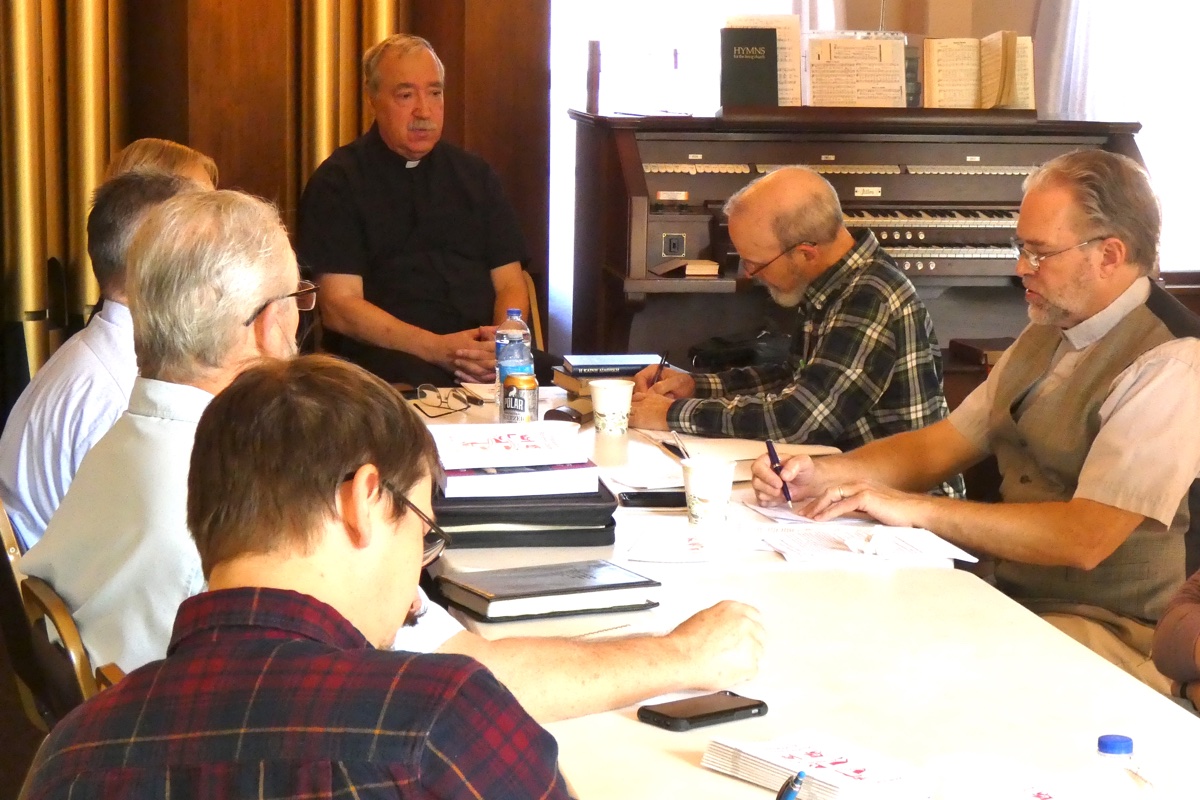
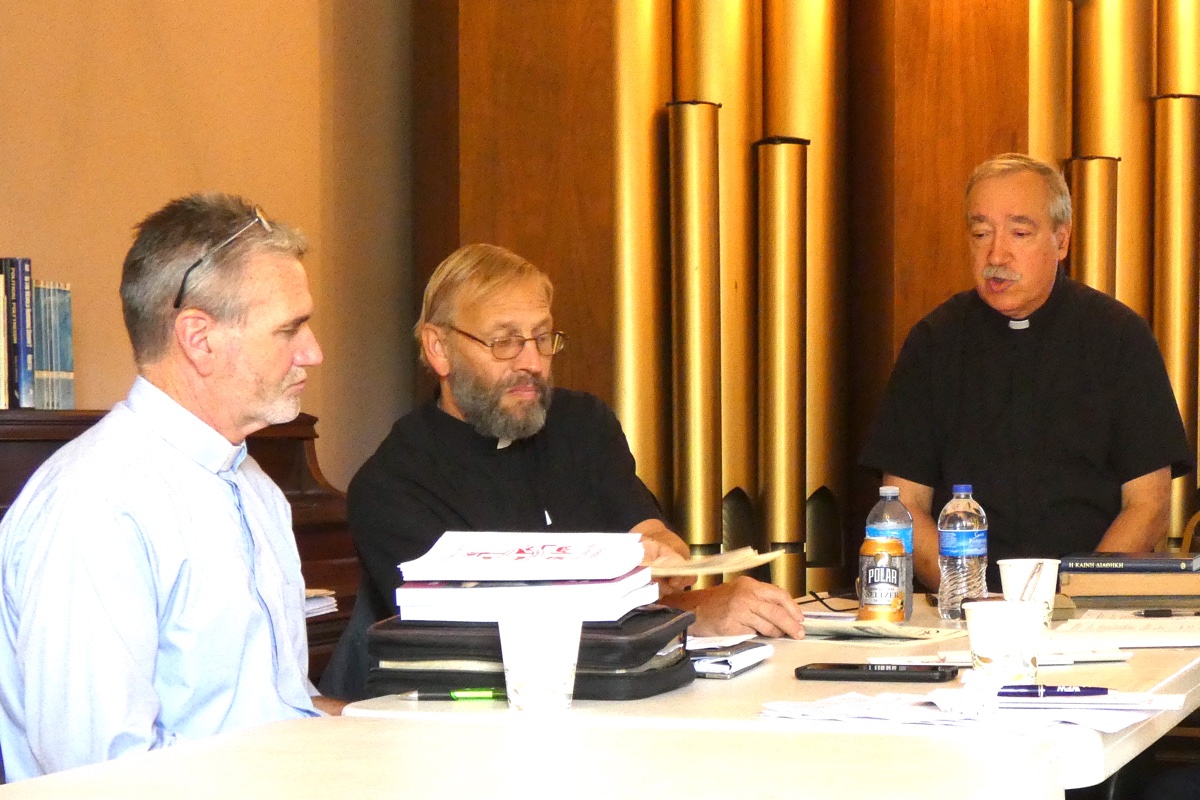
The Federation of Reformed ChurchesA Short History (AD 2008) David Shank and Stephen Jones[1] “We knew something was wrong”—so began Presbyter Dave Shank in his discussion of the early history of the Federation of Reformed Churches (FORC). All of us, the current and human results of that history, were happily seated with our wives and children or grandchildren, thoroughly enjoying the historical presentation along with the many stories that the longest serving FORC pastor was sharing with us. It was a warm and sunny day at a retreat/campground in upstate New York where we were joining together in our initial merging of the friendly fellowship of a family retreat and the sober deliberations of a Synod. This Synod/Retreat of the summer of 2008 was making FORC history even as Pastor Shank took us into the past. “We knew something was wrong”—so thought a tiny group of men meeting in Placerville, California during the month of August, 1989. Like-minded, were they? Not really; not at all, in fact. Beyond the idea that “something was wrong” with the current, evangelical church in America, this pre-FORC gathering consisted of brothers whose beliefs ranged from a mild form of Aryanism, American nationalism, and Roman Catholicism to mostly men with Protestant roots in Presbyterianism or Pentecostalism. This first “gathering” was certainly not a “synod” and could hardly be called a “meeting”. They were bewildered Christians somewhat discouraged that they might bear such a label as “maverick,” or even “heretic,” and the lonely burden that goes with that. “Something is wrong,” they said to each other and experienced, in sharing those words, a touch of relief for the loneliness each of them felt. At that time, the Christian walk of these few men with deep convictions seemed only to separate them from their Christian brothers and sisters throughout the world. The Christian Church in the late twentieth century was changing away from the Bible. These men were becoming vestigial appendages and no longer felt like members of the body of Christ on earth. God’s promise is covenantal so their experience ought to have been anything but lonely. Ironically, a cultural seed, becoming weed-like in the late twentieth century Church, may have been the prideful individualism of the Western and, especially, the North American world. Even the newer conservative denominations were not hearing what these Bereans believed the Word of God to be saying. Increasingly, others have been feeling the same way, and so, today, brothers from Africa and Korea send missionaries to heal our nation by exhorting it to return to Christ. “Something is wrong.” Why would these men be isolated for holding an optimistic view of eschatology?...for believing in the kingship of Jesus now?...for desiring to adhere to Biblical ethics…for wanting to feed their children at the Lord’s Table? Weren’t these things clearly stated in the Bible? Weren’t they believed for many centuries in the universal Christian Church? At first, these brothers shared little more than their loneliness and their dismay at what was happening among Christians, but soon they were pared down to more orthodox and reformed Protestants with much in common. At their next gathering—the first Synod held in Fairfax, Virginia in January 1990—the Fellowship of Reformed Churches was established. Present were David Baird, David Chilton, Rick Doughty, Ken Hines, Doug Mills, and Allen Shatley. Already, the Aryan and Roman Catholic influences had diminished and soon more nationalistic Americana, as well as Pentecostal leanings, would be less influential in our FORC history.
|
|
THREE WAYS TO AFFILIATE WITH THE FORC
|
|
ORGANIZED CHURCHES:
Organized churches are recognized by the presence of a Presbytery (i.e., a local ruling body composed of two or more Presbyters/Elders). Such churches may apply for membership in the FORC via application of the Presbyters. A local church is considered a member church when at least one member of the Presbytery of that church possesses FORC credentials.
CHURCH PLANTING:
Ministers involved in the task of church planting and desiring recognition by the FORC shall contact a local church within the FORC and establish a relationship with that church. An FORC church which becomes involved in such an endeavor shall be referred to as the sponsoring church. The minister seeking recognition by the FORC shall follow FORC recognition procedures (see BCO II, B). Once recognized, the Presbyter of the mission church shall be under the authority and direct supervision of the Presbytery of the sponsoring church. When the sponsoring church ordains, or installs, an additional Presbyter to serve with the first, the mission church will be recognized as a member church within the FORC.
ASSOCIATE MEMBERSHIP:
An associate membership with the FORC may be requested by a Presbytery in general agreement with FORC doctrine and sacraments. This membership must be approved by a Council (See BCO IV, B).
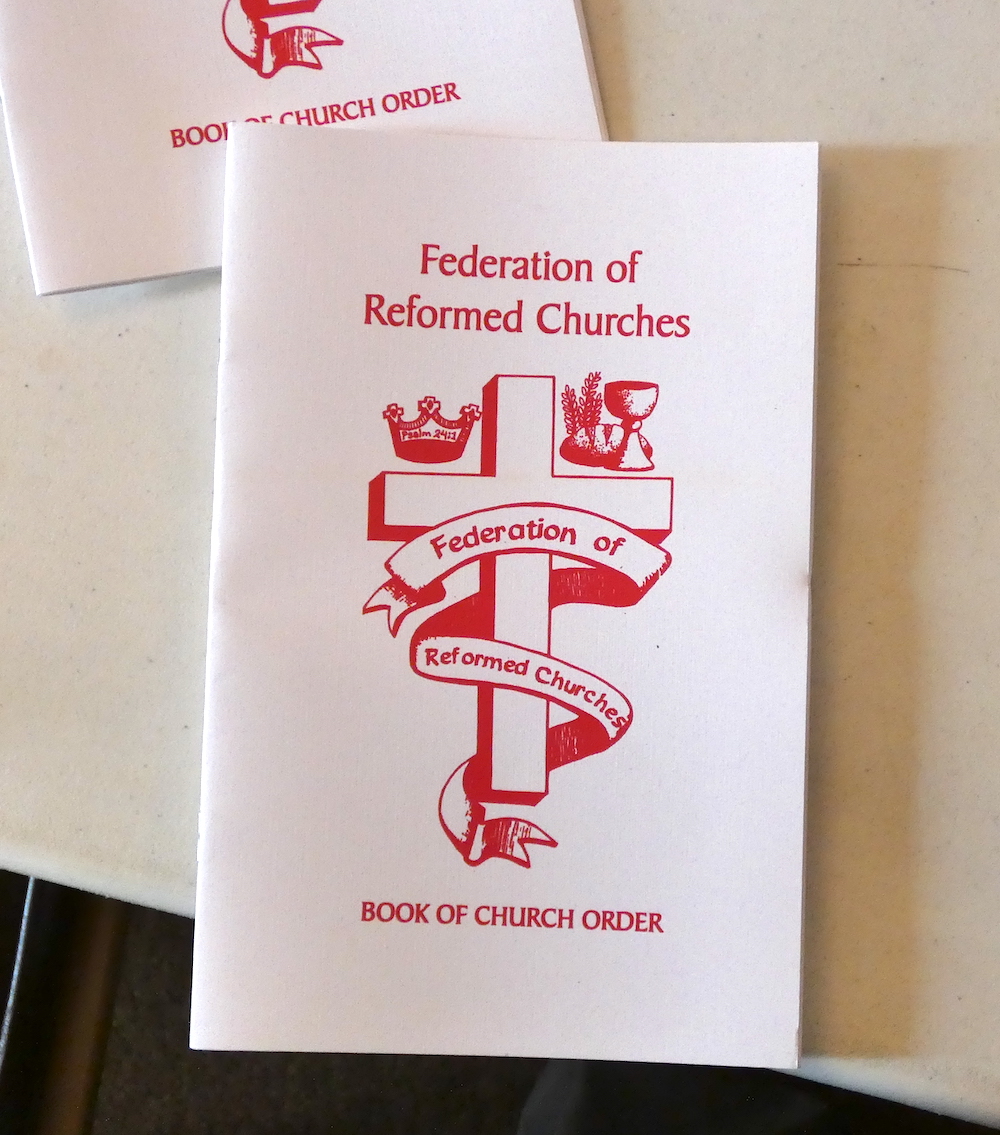
The complete FORC Book of Church Order is available by clicking on the link at the middle left side of the home page of the website.
|
|
Church Music at a Crossroads
|
|
The Liturgical Authority of the Old Testament
By Rev. Dr. Robert S. Rayburn
July 20,1999
There is a scene in the film Dead Poets Society in which Robin Williams, playing
a New England Prep School English teacher, begins a class by asking a young
student to read the introduction to a text on English poetry. The student begins,
but after a few lines, Robin Williams interrupts him and tells him that what
he has read is all wrong. Rip out that page, he tells the student. The student
smiles. Of course the teacher is joking. No. Rip it out! Rip that page out of
the book. Well, one doesn't have to tell a class of adolescent boys more than
twice to rip pages out of their textbooks. He rips the page out of the book
and his fellow students do the same.
|
THE PRESBYTERIAN DOCTRINES OF COVENANT CHILDREN, COVENANT NURTURE AND COVENANT SUCCESSION
One of the features of Presbyterian thought and life, which ought most dramatically to distinguish it from the prevailing evangelicalism, is its view of the church’s children. That, in fact, even evangelical Presbyterianism is not clearly differentiated in this way is, in my judgment, one of the saddest and most dangerous consequences of the debasement of our theology in both pulpit and pew. I do not hesitate to say that in respect to the doctrine of covenant succession, that set of truths connected with the purpose of God that his saving grace run in the lines of generations, there has been such a debasement and that it has resulted in Presbyterian people being robbed of one of the most precious parts of their inheritance.
|
|
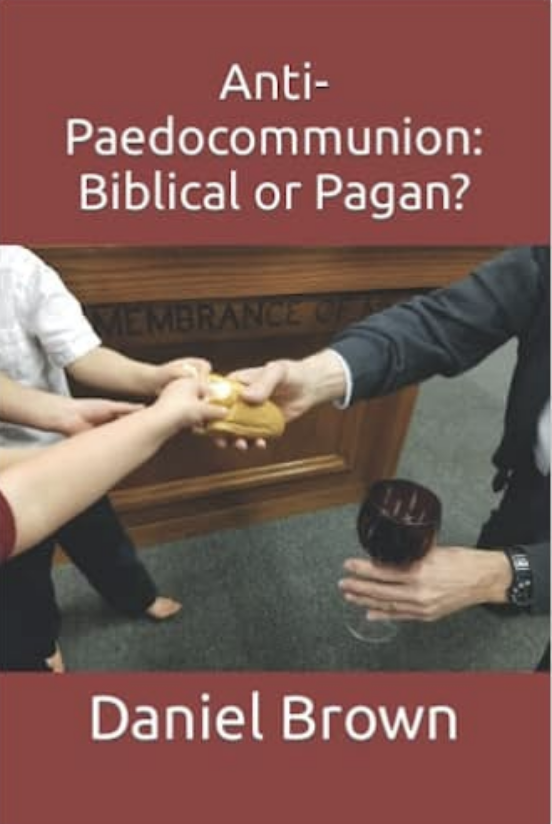
THE HISTORY OF PAEDOCOMMUNION: FROM THE EARLY CHURCH UNTIL 1500
|
|
by Tommy Lee
Why not let baptized infants and children back into the Lord's Supper? This request is not nearly so strange once it is understood that infant observance of the Lord's Supper was widespread in the early church.1
|
|  |
|
There isn't content right now for this block.
|
|
Don't have an account yet? You can create one. As a registered user you have some advantages like theme manager, comments configuration and post comments with your name.
|
|
|